OrgKit

Organize in the room, not the cloud

In brief

A desktop pinboard for organizing groups. It runs on your own laptop. Everyone in the room joins over the local network. It needs no internet.

Where the board livesA striped flyer. One machine hosts the board. The others in the room join over the WiFi they already have. The internet is plugged in and carries none of it.] ORGKITHOSTING.WHERE THE BOARD LIVESTHE INTERNETif you have oneTHE ROOMFIG. 1ORGKIT TRAFFIC: 0 BYTESTHE WIFI YOU HAVEYOUR MACHINE HOSTS ITCONNECTLIKE IT'S1974!EVERYONE ELSE JOINS FROM A BROWSERNO ACCOUNT.NO CLOUD.NO SIGNAL NEEDED.* Works with the router you already have. Batteries not included.

The wall

Things stay where you put them. Run string between the ones that connect. It stays tied when either end moves.
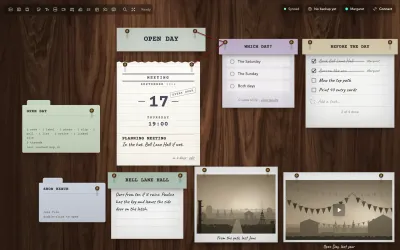
A board of pinned objects on wood: a file card summarising the board, a wide label reading OPEN DAY, a poll headed WHICH DAY?, a checklist headed BEFORE THE DAY, a torn-off notice giving a Thursday at 19:00, a handwritten note headed BELL LANE HALL, a photo of allotment plots, a video clip of bunting, and a card linking to another board. Red string runs from the label across to the poll and back down to the notice.
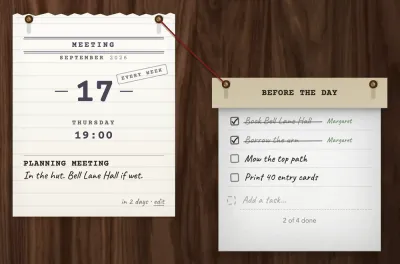
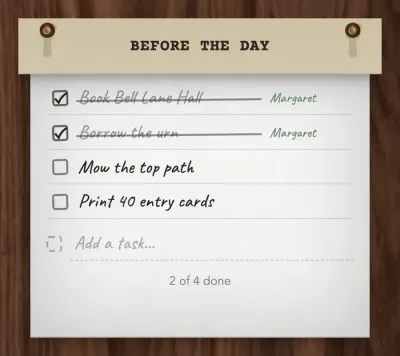
A notice torn from a ruled pad, headed MEETING, the numeral 17 large between two rules, Thursday 19:00, and the line PLANNING MEETING, in the hut, Bell Lane Hall if wet. Red string runs from its right pin down to a checklist headed BEFORE THE DAY, where Book Bell Lane Hall and Borrow the urn are ticked and initialled Margaret, and two jobs are still open.
The meeting and its jobs
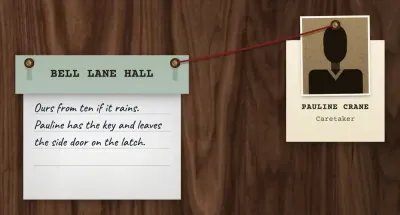
A note card headed BELL LANE HALL, its handwritten lines saying the hall is theirs from ten if it rains, and that Pauline has the key and leaves the side door on the latch. Red string runs from its right pin to a card from the index, a print pinned at the top over the name Pauline Crane and the role Caretaker.
The hall and who has the key

What you pin

Everything on the board is something you could pin to cork. Drag it, resize it, stack it on something else.
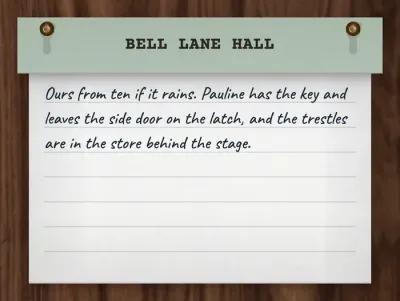
A note card headed BELL LANE HALL, with three handwritten lines: the hall from ten if it rains, Pauline with the key and the side door on the latch, the trestles in the store behind the stage.
Note
A checklist headed BEFORE THE DAY. Two tasks are ticked and struck through, each initialled Margaret, and two are still open. The foot reads 2 of 4 done.
List. Each tick keeps a name.
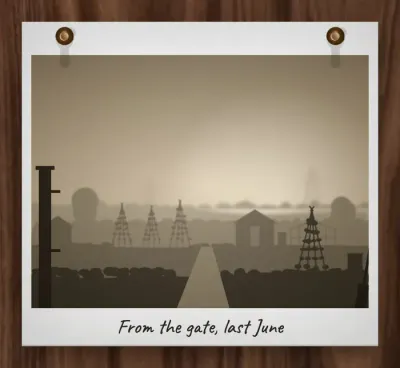
A photo of allotment plots at low sun, the path running up between the beds to a shed, pinned at both corners and captioned From the gate, last June.
Photo, dropped onto the board
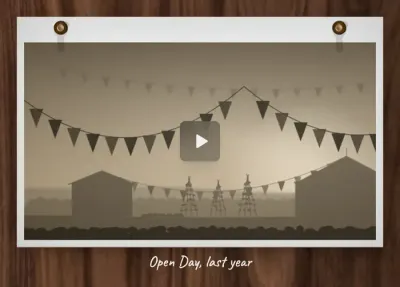
A video clip of bunting strung between two huts over the plots, paused, a play button resting over the frame, captioned Open Day, last year.
Clip. It plays where it hangs.
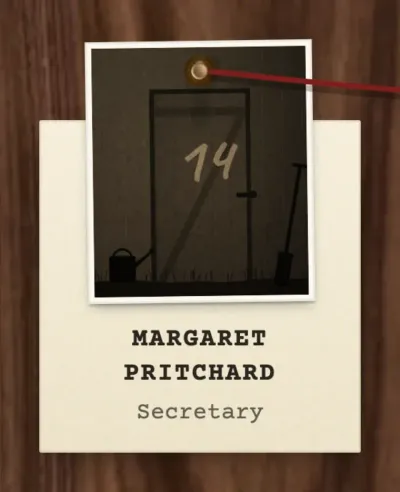
A small card pinned to the board, carrying a print of a shed door numbered 14 that hangs from a brass pin at its top edge, and below it the name Margaret Pritchard and the role Secretary. Red string runs from the pin off the edge of the frame.
Contact card

Ask the room

A poll pins to the board like anything else. Everyone votes from their own screen. The count updates for all of them. You can change your vote.
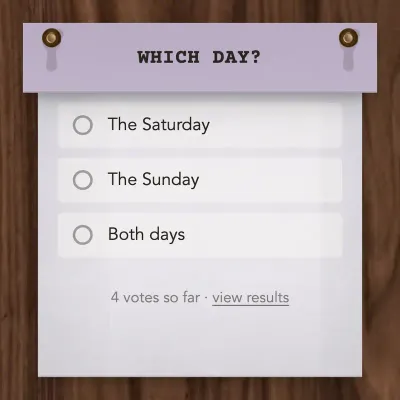
A poll headed WHICH DAY? with three options nobody has selected: The Saturday, The Sunday, Both days. The foot reads 4 votes so far, view results.
Open
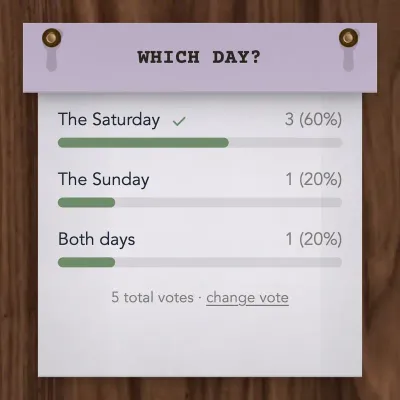
The same poll counted: The Saturday is ticked with 3 votes at 60 percent, The Sunday and Both days hold 1 each at 20 percent. The foot reads 5 total votes, change vote.
Counted

When it happens

A date is a notice torn off a pad. The day is big enough to read across the room. Meetings, workshops, gatherings and deadlines each get their own paper. The notice counts down, repeats if you tell it to, and greys out after the day.
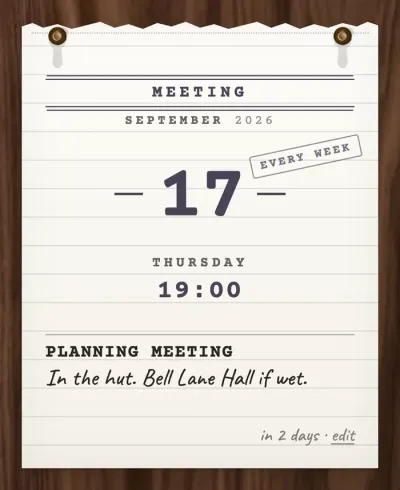
A notice torn from a ruled pad, headed MEETING, September 2026. A large numeral 17 sits between two rules under a stamp reading EVERY WEEK, with Thursday 19:00 beneath it and the line PLANNING MEETING, in the hut, Bell Lane Hall if wet. The foot reads in 2 days.
Weekly meeting
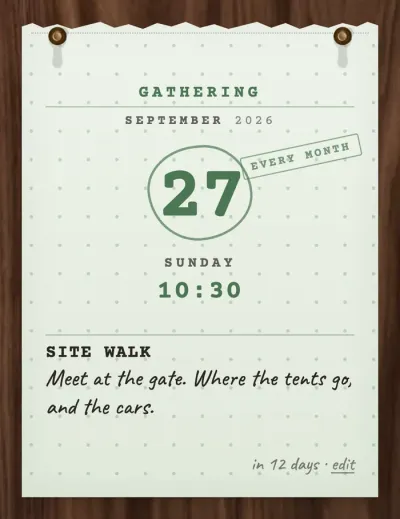
A notice on dotted stock in green, headed GATHERING, September 2026. The numeral 27 is ringed by hand under a stamp reading EVERY MONTH, with Sunday 10:30 beneath it and the line SITE WALK, meet at the gate, where the tents go, and the cars. The foot reads in 12 days.
Monthly site walk
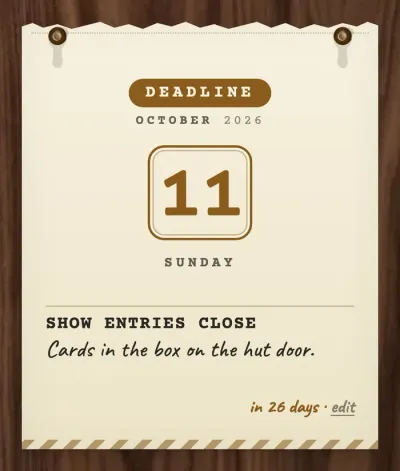
A notice on manila stock with hazard stripes along its foot, headed DEADLINE, October 2026. The numeral 11 sits in a rounded box over Sunday, with no time given, and the line SHOW ENTRIES CLOSE, cards in the box on the hut door. The foot reads in 26 days.
Deadline. No time set.

Everyone edits at once

Everyone on the board shows up by name, with a colour and a cursor. Two people can type in the same card. The edits merge.
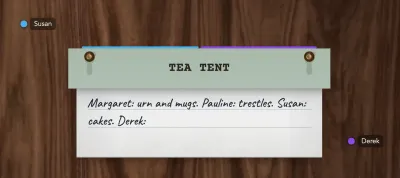
A card headed TEA TENT carrying one handwritten line of who brings what and a second line half typed. Two coloured slivers divide its top edge, and two cursor labels, Susan and Derek, sit either side of the card.

Where boards live

Boards go in folders. Folders are drawers in a cabinet. Each drawer is labelled with what its board holds and a post-it with the next date. The calendar on the wall marks the days something is on. The app opens here.
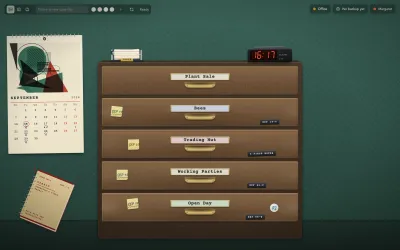
The app's folders page: a wooden filing cabinet against a green wall, five drawers labelled Plant Sale, Bees, Trading Hut, Working Parties and Open Day, four of them wearing a post-it with a date and a strip of embossed tape. A card index and a digital clock stand on the lid, a wall calendar hangs to the left with the fifteenth ringed and five more days marked, and the operator's field manual hangs pinned below it.

What it is

OrgKit is a shared pinboard for people who organize in person: tenants' unions, mutual aid groups, campaigns, reading groups. You pin notes, photos, video, lists, polls and dates to a board. You run string between the things that connect. You file boards in folders.

It is an app you install. One person runs it on their laptop. Everyone else opens a browser on the same network and types the address. There is no account, no invite link and no admin. If you are in the room, you are in.

Everyone sees the same board and edits it at the same time. Changes merge. Two people editing at once is normal.

Nothing leaves the room.

Why it is built this way

Most organizing tools assume everyone has a cloud account and a connection that never drops. Groups that meet in a room do not work that way. They keep sensitive material about real people. They cannot promise anyone that a platform will keep its terms, its prices or its politics.

So OrgKit runs on hardware you control, over a network you control. Its material is files on your own disk. You can see them and copy them anywhere. A farm with no uplink and one router nobody has logged into is a supported setup. There is no hosted version, and there will not be one.

The files